2025
-
Academic Project
BC Parks Redesign
A cluttered government site, reimagined as a visual gateway to nature.
Category
Website Redesign / Public Service
Role
UI/UX Designer

Overview
Reimagining a cluttered government site as a visual gateway to nature
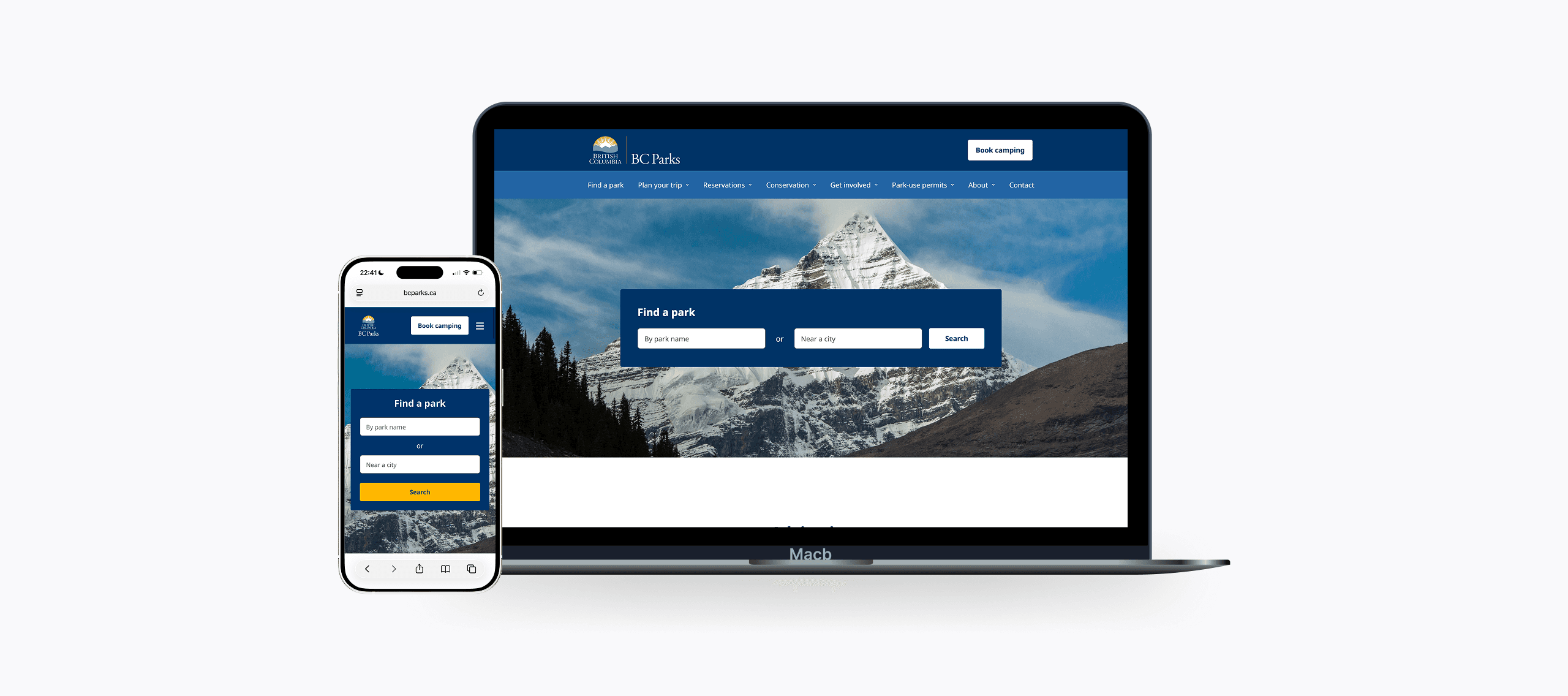
BC Parks is the official website for British Columbia's natural parks. In a two-week academic design sprint, I redesigned it to help first-time visitors discover parks and understand the campsite reservation flow, without getting lost in a dense government site.
Working solo, I ran a UI review and survey research, then restructured the experience around visual discovery: an interactive map of BC as the entry point, with park photos, location context, and booking paths surfaced where people actually decide.
Team
Solo
Timeline
2-week design sprint
Context
Lots of information, no obvious place to start
The original BC Parks site held a wealth of useful information, but the structure left first-time visitors unsure where to begin. People new to outdoor recreation in BC had to already know what they were looking for.
Two moments mattered most: discovering a park that fit their needs, and moving from browsing to an actual reservation. A dense, text-first site made both harder, creating reservation anxiety: if you can't picture the trip or find the booking path, you abandon before you start.
The redesign had to balance three things at once: inspiration, practical information, and a smoother booking path, so exploration leads naturally to a confident reservation.
Insights & Analysis
UI review: three issues in the existing experience
I walked the site as a first-time visitor trying to discover a park and book a campsite. Three issues stood out.


Research
Visual-driven decision making
A survey of how people choose outdoor destinations surfaced two consistent patterns.
The experience had to serve both: visual inspiration up front, and the key planning facts immediately behind it. So I made discovery visual while keeping location, price, and availability one tap away.
Wireframing
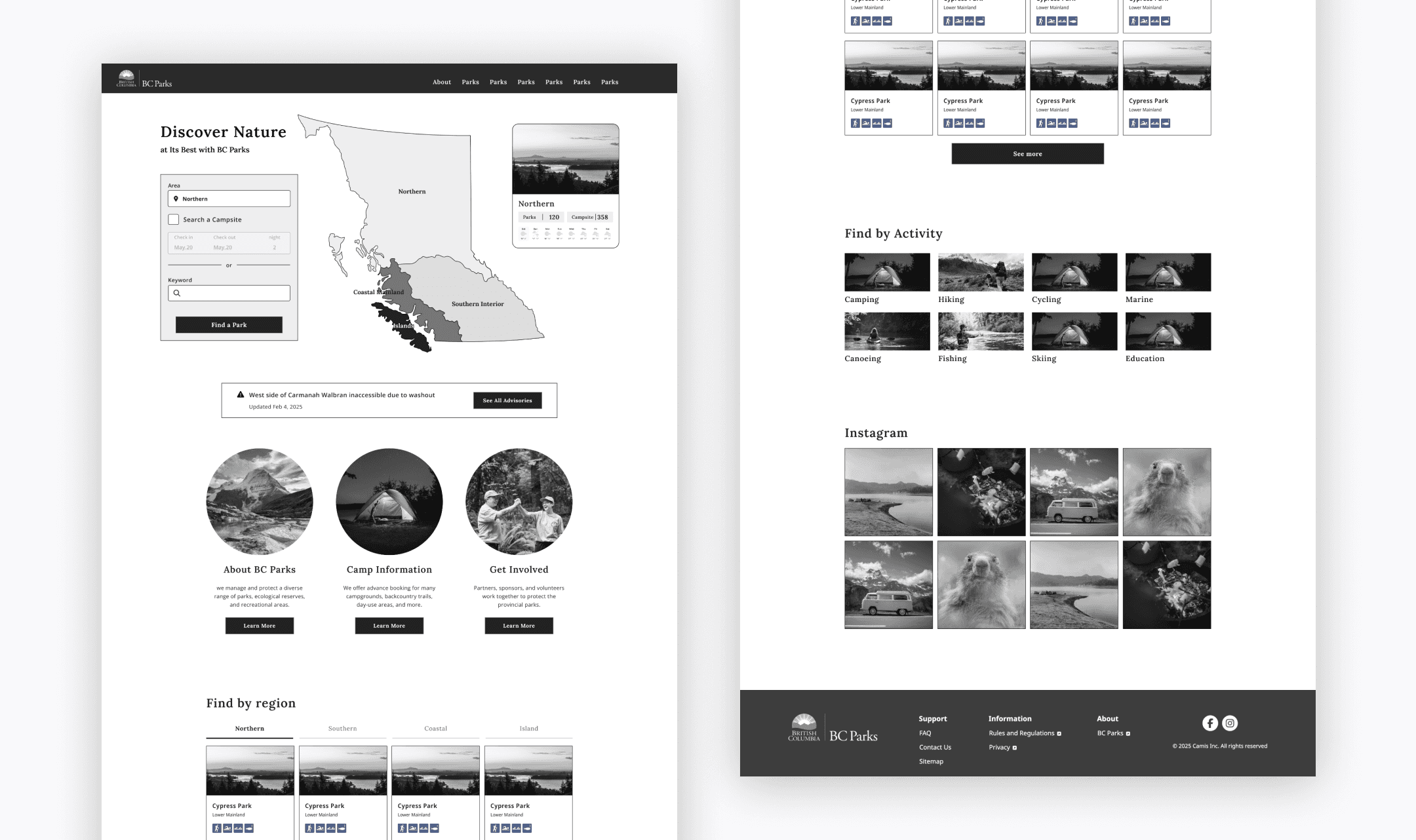
Prioritizing Clarity and Ease of Use
I restructured the page hierarchy so users could understand the available parks, compare options, and move toward reservation with less friction.
Photos, park characteristics, location, and reservation entry points moved to more prominent positions, so decisions didn't require hopping across pages.
Final Design
A Visual Gateway to Nature
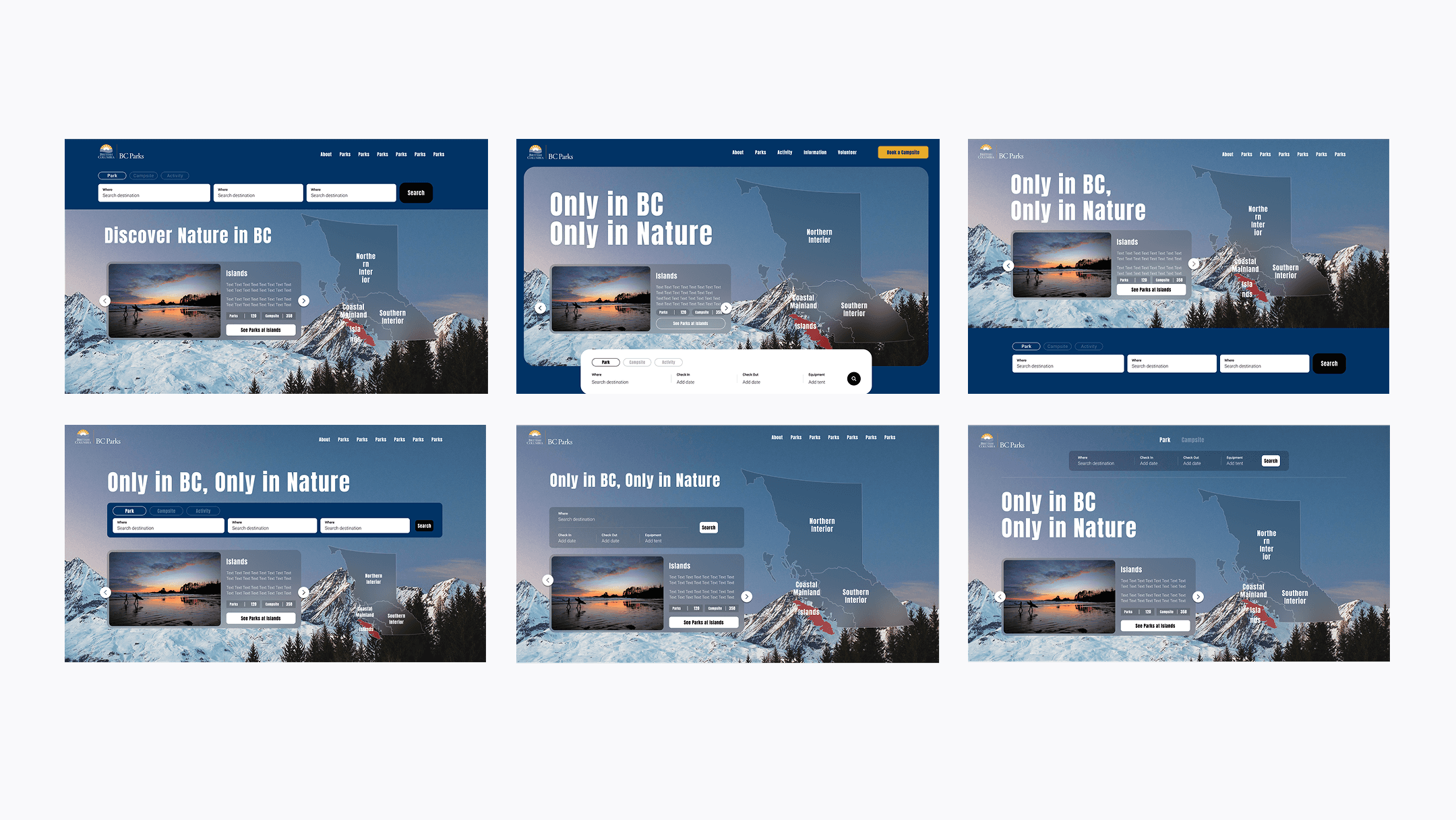
The final design leads with a large interactive map of British Columbia in the hero. Hovering over a region surfaces parks through representative photos and regional highlights.
It combines visual exploration with practical navigation, helping users picture where they want to go before the reservation process even begins.

Reflection
Making park discovery feel approachable
For a first-time visitor, choosing a park isn't only about finding an available campsite. It's about imagining the experience, comparing options, understanding location and access, and feeling confident enough to book.
This redesign showed me how visual inspiration, a clear information hierarchy, and visible booking paths can work together to make outdoor planning, and a public-service site, feel more approachable.